
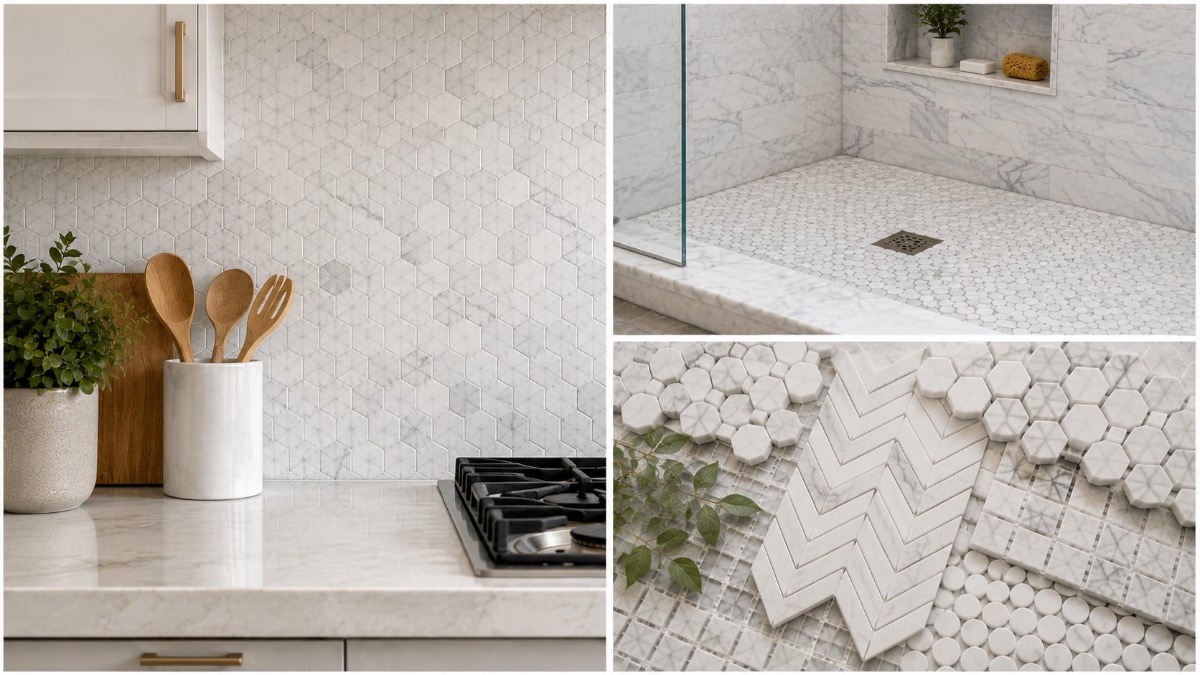
A marble mosaic can completely change the character of a room. It can turn a plain kitchen wall into an architectural feature, give a compact bathroom a sense of depth, or make a shower feel more like a private spa than a purely practical space.
The challenge is that marble is not a uniform, predictable material. Every piece has its own veining, tonal variation, mineral markings, and subtle imperfections. That individuality is exactly what attracts many homeowners and designers. It is also what makes the buying process more complicated.
When searching for marble mosaic tile for sale, it is easy to focus on the pattern shown in a product photograph. Yet shape is only one part of the decision. The type of marble, tile size, surface finish, grout color, installation area, maintenance expectations, and even lighting conditions can all affect the final result.
A polished mosaic that looks stunning on a kitchen backsplash may not be the smartest choice for a frequently used shower floor. A dramatic Calacatta pattern that feels balanced on a sample sheet may become visually dominant across an entire wall. Conversely, a quiet Carrara mosaic can appear almost plain in a showroom but develop remarkable depth once installed under warm lighting.
The best choice is therefore not simply the most attractive tile. It is the tile that suits the room, the household, and the way the surface will actually be used.
Why Marble Mosaic Continues to Feel Special
Marble has been used in architecture and decorative interiors for centuries, but it does not feel trapped in the past. The material works in traditional homes, minimalist apartments, transitional kitchens, luxury hotels, compact powder rooms, and highly personal renovation projects.
That flexibility comes partly from the stone itself and partly from the mosaic format.
Large marble tiles emphasize broad veining and uninterrupted surfaces. Mosaics create rhythm. Small pieces introduce movement, texture, and pattern while allowing the installer to work around corners, niches, curved areas, and sloped shower bases.
A classic white-and-gray Carrara mosaic can feel quiet and restrained. Calacatta Gold creates stronger contrast through broader gray veining and warmer gold-toned details. Thassos White provides a brighter, more crystalline appearance. Crema Marfil brings soft beige warmth, while Emperador marble introduces deep brown tones and a more dramatic atmosphere.
Surfaces Galore offers marble mosaics in materials and patterns ranging from Carrara penny rounds and Calacatta hexagons to Thassos basketweave, Crema Marfil octagons, Bianco Dolomite lantern shapes, and darker Emperador mosaics.
This range matters because the phrase marble mosaic tile for sale can describe products with completely different visual and practical characteristics. Two mosaics may both be made from marble, yet create very different rooms.
Begin With the Room, Not the Product Photograph
A common mistake is falling in love with a mosaic before deciding where it will be installed.
The better approach is to start with the room.
Ask several practical questions:
- Will the tile be exposed to constant moisture?
- Is it intended for a wall or a floor?
- Does the area receive natural light?
- Will cooking grease, soap residue, cosmetics, or hard water regularly reach the surface?
- Is the homeowner comfortable with sealing and caring for natural stone?
- Should the finished room feel calm, dramatic, warm, bright, traditional, or contemporary?
These questions narrow the options much faster than browsing hundreds of patterns without a plan.
A homeowner once described the process perfectly: “I kept choosing the tile I loved most on its own, but none of those choices worked with the kitchen I actually had.”
That is an important distinction. A mosaic is not viewed in isolation after installation. It interacts with cabinets, countertops, faucets, flooring, mirrors, lighting, wall color, and furniture.
The right tile supports those elements rather than competing with all of them.
Choosing Marble Mosaic Tile for Sale by Stone Type
Different marble varieties create different emotional impressions. Understanding those differences makes it easier to select a material that will still feel appropriate years after the renovation is complete.
Carrara Marble for Quiet, Classic Interiors
Carrara White marble is known for its pale background and soft gray veining. It is often chosen for kitchens and bathrooms because it can add natural character without becoming visually aggressive.
Carrara works particularly well with:
- White, gray, navy, or natural wood cabinetry
- Brushed nickel and chrome fixtures
- Traditional shaker kitchens
- Transitional bathrooms
- Black accents used in moderation
A Carrara penny-round mosaic can make a bathroom feel gentle and slightly nostalgic. A Carrara herringbone pattern feels sharper and more structured. A tumbled Carrara mosaic adds texture and an aged, European quality.
The stone remains the same family, but the pattern changes its personality.
Calacatta Gold for Stronger Contrast
Calacatta Gold usually makes a bolder statement. Its veining tends to be broader and more noticeable, often with warm gold or beige undertones.
This material works especially well when the room includes brass, bronze, cream, warm white, walnut, or taupe. It can also create contrast in an otherwise restrained interior.
However, Calacatta requires judgment.
A small sample may show one beautiful vein crossing several pieces. Across multiple boxes, the overall variation may be stronger. That is not a manufacturing defect. It is part of the character of natural stone.
For this reason, installers should dry-lay and blend sheets from different boxes before fixing them permanently. Doing so distributes light, dark, quiet, and expressive pieces more naturally across the surface.
Thassos White for Bright, Clean Spaces
Thassos marble is valued for its bright white appearance and subtle crystalline quality. It can make small bathrooms feel more open and reflective.
It pairs well with:
- Minimalist white interiors
- Green or blue marble accents
- Polished chrome
- Pale wood
- Clean geometric patterns
A completely white room can sometimes feel cold, though. Introducing warm lighting, timber cabinetry, brushed brass, or a contrasting grout can prevent the space from appearing sterile.
Crema Marfil and Emperador for Warmth
Not every marble project needs to be white or gray.
Crema Marfil offers a soft beige foundation that works naturally with warm woods, cream cabinets, traditional furniture, and Mediterranean-inspired interiors. Emperador marble creates greater drama through rich brown coloring and expressive veining.
These materials can be particularly effective in rooms where pure white stone would feel disconnected from the rest of the home.
Marble Backsplash Tile: Beauty Without Overcrowding the Kitchen
A marble backsplash tile is one of the most effective ways to introduce natural stone without covering a large floor or entire room.
The backsplash occupies a relatively small area, but it sits directly within the visual center of the kitchen. It connects the countertop to the cabinets and often becomes the background for the range, sink, and preparation area.
That makes pattern scale important.
Herringbone Creates Direction
A herringbone mosaic adds movement and gives the eye a clear direction to follow. It works particularly well behind a range or across a long wall of cabinetry.
In a narrow kitchen, a smaller herringbone can feel detailed and energetic. In a large kitchen, a slightly larger format may create a more balanced result.
The pattern should not fight with a heavily veined countertop. When the worktop already contains bold movement, a simpler mosaic or quieter marble is usually more successful.
Hexagons Feel Structured but Not Severe
Hexagonal mosaics create a geometric surface without feeling as rigid as straight rectangular tiles.
Small hexagons can suit vintage bathrooms and compact kitchen areas. Larger hexagons often look more contemporary. Calacatta Gold hexagons, for example, combine strong natural veining with an orderly geometric shape.
The contrast between irregular stone markings and a precise tile outline is part of their appeal.
Arabesque and Lantern Patterns Add Ornament
Arabesque or lantern mosaics introduce curves into rooms dominated by straight cabinetry, rectangular appliances, and square countertops.
They can look beautiful in a simple kitchen where the backsplash is intended to become the main decorative feature. In a room already containing ornate cabinet doors, patterned flooring, and decorative hardware, however, the same mosaic may feel excessive.
Ornament needs space around it.
A decorative tile often looks more expensive when the surrounding design is restrained.
A Practical Kitchen Scenario
Imagine a kitchen with warm white shaker cabinets, a lightly patterned quartz countertop, brass hardware, and medium oak flooring.
Three backsplash options are being considered:
- A dramatic Calacatta Gold arabesque mosaic
- A Carrara White herringbone mosaic
- A plain polished Thassos subway tile
The Calacatta arabesque would create the strongest focal point. It could work well if the rest of the kitchen remains simple, but the combination of pronounced veining and a decorative shape might compete with the countertop.
The Thassos option would brighten the room, although it might appear slightly disconnected from the warmer oak and brass elements.
The Carrara herringbone would probably offer the best compromise. Its gray veining would introduce natural variation, while the herringbone layout would add interest without overpowering the other materials.
There is no universally correct answer. The decision depends on what the homeowner wants the backsplash to do.
Should it dominate? Coordinate? Brighten? Soften?
That question is more useful than asking which tile is currently fashionable.
Selecting Marble Shower Floor Tile Safely
A marble shower floor tile must perform differently from a kitchen backsplash.
A backsplash is mainly judged by appearance, stain management, and ease of cleaning. A shower floor must also provide grip, accommodate drainage, tolerate frequent moisture, and work with the slope of the shower base.
Small mosaics are generally better suited to shower floors than large marble tiles because the greater number of grout joints creates additional grip and allows the surface to follow the required slope more accurately. Honed, textured, and mosaic marble formats are generally more suitable for wet floors than large polished pieces.
Why Small Pieces Work Better
A shower floor is not completely flat. It must slope toward the drain.
Large rigid tiles can be difficult to install across multiple changes in plane. Smaller mosaics conform more easily to the shape of the shower base. Their grout lines also divide the surface into many small contact areas.
Penny rounds, one-inch squares, two-inch hexagons, and small basketweave patterns are common choices.
This does not mean every small mosaic is automatically safe. Finish, installation quality, grout choice, cleaning products, and soap buildup also influence traction.
Honed Versus Polished Marble
Polished marble has a reflective surface that intensifies color and veining. It can look spectacular on shower walls, niches, and backsplashes.
On a shower floor, polished stone may become slippery when wet.
Honed marble has a softer, matte appearance. It reflects less light but generally offers better grip and hides certain surface marks more effectively.
For many shower projects, the most practical combination is:
- Polished marble on walls
- Honed or tumbled mosaic marble on the floor
- Coordinating stone in the niche or border
This allows the room to retain a luxurious appearance without ignoring practical safety.
Surfaces Galorelists both polished and honed options for several mosaic products, including Carrara White and Oriental White marble, with honed finishes positioned as suitable choices for wet areas.
The Compromise Nobody Should Ignore: Natural Stone Needs Care
Marble is beautiful, but it is not maintenance-free.
It is a calcium-based natural stone. Acidic substances can react with the surface and create dull marks known as etching. Harsh bathroom cleaners, vinegar, lemon-based products, and some limescale removers may damage the finish.
This is where expectations matter.
Someone who wants a perfectly uniform surface that looks unchanged after years of minimal care may be happier with marble-look porcelain. Someone who appreciates natural variation and accepts that stone develops character over time may find real marble far more satisfying.
Neither preference is wrong.
The problem begins when marble is purchased with porcelain expectations.
Sealing Helps, but It Is Not Magic
A suitable penetrating sealer can help reduce the absorption of water and stains. It does not make marble indestructible, and it does not prevent every form of etching.
The stone should be sealed according to the recommendations of the tile supplier, sealer manufacturer, and installer. Grout may also require protection depending on the product used.
Resealing intervals vary according to the stone, application, cleaning routine, and sealer. Rather than following an arbitrary calendar, homeowners can monitor how quickly water darkens or absorbs into the surface and consult a stone-care professional when uncertain.
Cleaning Should Be Gentle
For regular cleaning:
- Use a pH-neutral cleaner intended for natural stone
- Remove soap residue before it forms a heavy film
- Avoid abrasive pads
- Do not use acidic household mixtures
- Dry exposed surfaces when practical
- Address leaks or failed grout joints promptly
A simple routine performed regularly is usually better than aggressive cleaning after months of buildup.
Grout Color Changes the Entire Design
Grout is often selected at the end of the project, but it has a major effect on the final appearance.
A grout color close to the marble background creates a more continuous surface. The pattern remains visible, but the stone receives most of the attention.
A contrasting grout emphasizes every individual piece. This can make hexagons, herringbone, basketweave, or penny rounds appear more graphic.
Consider a white Carrara herringbone mosaic.
With pale gray grout, the pattern feels soft and integrated. With dark charcoal grout, every angle becomes pronounced. The same tile can move from elegant and quiet to bold and architectural.
Contrast also affects maintenance. Very light grout may show discoloration more readily in busy kitchens or showers. Very dark grout can sometimes highlight mineral residue from hard water.
Test the combination before committing. A sample board with actual tile, grout, lighting, and nearby countertop material is far more informative than viewing each item separately.
Installation Quality Can Make or Break Expensive Marble
A premium mosaic installed poorly will not look premium.
Natural stone requires careful substrate preparation, appropriate setting materials, consistent sheet alignment, full adhesive coverage, and detailed planning around edges, drains, niches, outlets, and corners.
Some mesh-mounted mosaic sheets can reveal their boundaries after installation. This happens when the spacing between sheets differs from the spacing between pieces on the sheet.
A skilled installer adjusts individual pieces where necessary instead of treating every sheet as an untouchable square.
Several other installation issues deserve attention:
The Substrate Must Be Flat and Stable
Mosaics can follow small irregularities in the wall or floor. Unfortunately, that does not mean those irregularities disappear. They may become more visible under side lighting or after grout is applied.
White Setting Material Is Often Preferable
Light-colored and translucent natural stone may be affected by darker adhesives. The installer should use a setting material approved for the chosen marble and application.
Waterproofing Is Separate From the Tile
Marble and grout are not the waterproofing system.
A shower requires a properly designed waterproof assembly behind or below the visible tile layer. Attractive marble cannot compensate for failed preparation.
Dry-Laying Prevents Surprises
Natural stone pieces should be examined and blended before installation. Strong veins, darker sheets, chipped pieces, and unusual markings can then be positioned intentionally.
The installer should not simply open one box at a time and place each sheet in order.
How Much Tile Should You Order?
Ordering exactly the measured area is risky.
Extra material is required for cuts, pattern alignment, breakage, selection, and future repairs. The appropriate overage depends on the layout and complexity of the room.
A straightforward backsplash may require approximately 10 percent extra. Intricate patterns, diagonal installations, multiple corners, niches, or irregular shower floors may justify 15 percent or more.
Before ordering, confirm:
- Whether pricing is per sheet, piece, or square foot
- How much area each sheet covers
- Whether trim pieces are needed
- Whether the same batch can be supplied
- Whether samples are available
- How damaged material is handled
- Whether additional matching stock is likely to remain available
Natural stone batches vary. Ordering extra material at the beginning is usually safer than trying to match the installation months or years later.
Polished, Honed, or Tumbled?
Finish changes both the appearance and performance of marble.
Polished
Polished marble appears glossy and reflective. Veining looks stronger, colors appear deeper, and the surface feels formal.
Best suited for:
- Kitchen backsplashes
- Shower walls
- Decorative niches
- Fireplace surrounds
- Feature walls
Honed
Honed marble has a smooth matte or satin surface. It feels quieter and more contemporary while generally offering better grip than polished stone.
Best suited for:
- Bathroom floors
- Shower mosaics
- Relaxed kitchens
- Contemporary interiors
- Areas where glare should be reduced
Tumbled
Tumbled marble has softened, irregular edges and a textured, aged appearance. Hand-tumbled products may intentionally contain edge variation rather than perfectly uniform lines.
Best suited for:
- Rustic or Mediterranean interiors
- Traditional shower floors
- Textured backsplashes
- Decorative borders
- Rooms intended to feel established rather than newly manufactured
Tumbled marble is not supposed to look mechanically perfect. Its irregularity is part of the design.
Common Buying Mistakes and How to Avoid Them
Choosing From a Screen Alone
Computer and phone displays do not accurately reproduce every shade, reflection, or mineral detail. Order a sample whenever possible.
Ignoring Variation
Marble is not printed material. Variation should be expected and planned into the design.
Using the Same Finish Everywhere
Matching walls and floors does not require identical finishes. A polished wall and honed floor can look coordinated while serving different practical needs.
Selecting the Pattern Before the Scale
A tiny pattern may appear too busy across a large wall. A large pattern may lose impact in a narrow niche. Measure the actual area and visualize how many repeats will be visible.
Forgetting the Grout
The grout can soften or intensify the design. It should be selected alongside the tile, not after installation has already begun.
Hiring an Installer Without Stone Experience
Natural marble behaves differently from ceramic or porcelain. Ask potential installers to show completed natural-stone mosaic work, especially shower floors and patterned backsplashes.
When Marble Mosaic Is Worth the Investment
Marble mosaic makes sense when the homeowner values natural variation, tactile depth, and materials that do not look mass-produced.
It is especially effective in smaller but visually important areas:
- The wall behind a range
- A shower floor
- A bathroom niche
- A vanity backsplash
- A fireplace surround
- A decorative border
- A powder-room feature wall
Using marble selectively can also control the budget.
For example, instead of covering an entire bathroom in Calacatta Gold, a homeowner could use a Calacatta mosaic inside the shower niche and on the vanity wall, while choosing a simpler coordinating tile for the remaining surfaces.
The room still gains the character of natural stone, but the installation becomes less expensive and easier to maintain.
Final Recommendation
Finding the right marble mosaic tile for sale requires more than choosing the most impressive photograph.
Start with the application. A kitchen backsplash allows greater freedom in finish and pattern, while a shower floor demands careful attention to tile size, grip, slope, sealing, and installation quality.
Then consider the material.
Carrara offers restrained elegance. Calacatta Gold creates stronger drama. Thassos brightens a room. Crema Marfil adds warmth. Emperador introduces depth and contrast. Patterns such as herringbone, penny round, hexagon, basketweave, and arabesque can then shape the style further.
Most importantly, accept marble for what it is.
It will vary. It may develop a patina. It requires appropriate cleaning. Certain pieces will contain stronger veins or natural markings than others. These qualities are not flaws to be hidden. They are the reason a real marble surface feels different from a printed imitation.
Before ordering, request samples, compare finishes, examine the tile under the room’s actual lighting, discuss the project with an experienced installer, and purchase enough extra material for selection and future repairs.
A thoughtful decision now prevents expensive disappointment later.
Choose the stone for the life that will happen around it—not only for the photograph you hope to take when the room is finished.